When AI Decides Who Gets a Loan: The Promise, the Danger, and the Path Forward
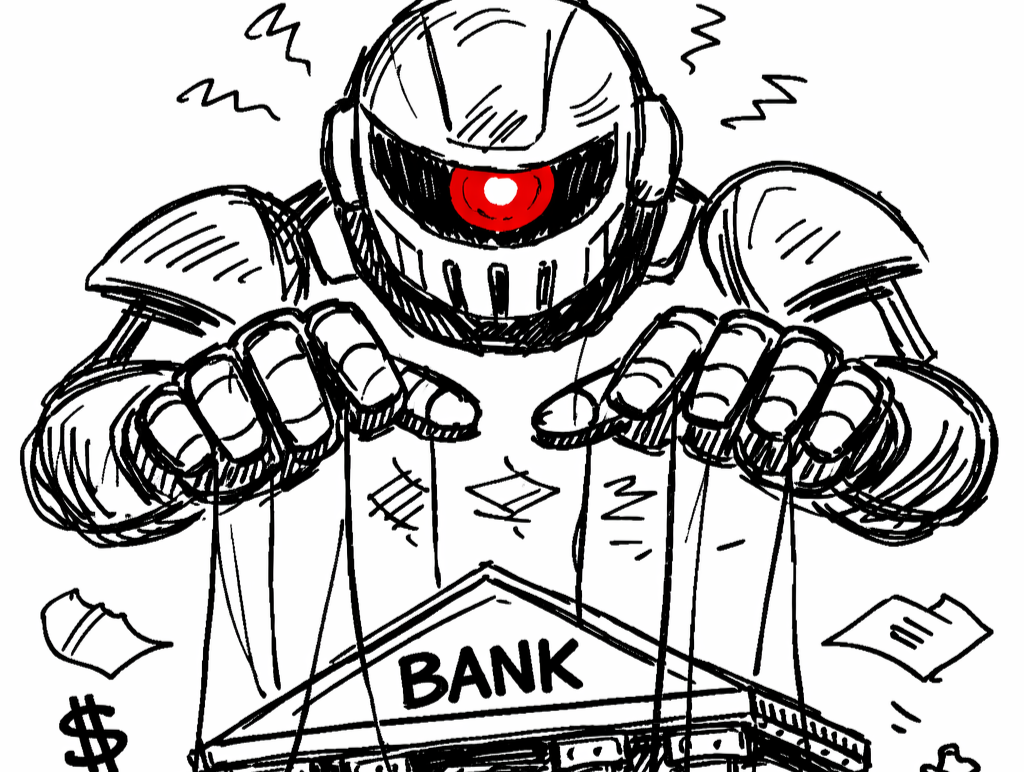
Artificial intelligence is transforming the financial sector. From credit scoring to fraud detection to portfolio optimization, banks are increasingly relying on complex machine‑learning systems to make faster, more accurate decisions. But as AI becomes more powerful, a critical question emerges: What happens when banks rely on models they don’t fully understand? This is the heart of the “AI black box” problem and it’s one of the most important issues in modern credit risk management.
Why Banks Are Turning to AI for Credit Decisions
Traditional credit scoring models ie (logistic regression, scorecards, expert rules) have served banks well for decades. But they have some of the following limitations:
- They struggle with non‑linear relationships
- They require heavy manual feature engineering
- They can’t easily incorporate alternative data
- They often underperform in thin file niche or emerging market segments
AI models, particularly tree based ensembles and neural networks offer a powerful advantage in modern credit decisioning. They deliver higher predictive accuracy, can process thousands of variables simultaneously, and are capable of detecting subtle risk patterns that traditional models often miss. Beyond accuracy, they also enable much faster decisioning at scale, allowing financial institutions to evaluate applications more efficiently without sacrificing analytical depth.
The Hidden Danger: The AI Black Box
Many advanced AI models are opaque. They produce predictions without clearly showing why.
This creates several risks:
-
Lack of Explainability
If a model rejects a loan, can the bank explain the reason to the customer or ...the regulator? If the answer is no, the model is a liability.
-
Hidden Bias
AI learns from historical data. If historical decisions were biased, the AI will amplify that bias. For example a model may penalize applicants from certain postal codes, and overweighting other variables correlated with income or ethnicity. Without transparency, these biases go undetected.
-
Regulatory Non‑Compliance
Frameworks like the GDPR, Model Risk Management, Fair Lending Regulations all require explainability, fairness, and auditability. A black box model that cannot be explained is a regulatory time bomb.
-
Over Reliance on Model Outputs
When analysts don’t understand how a model works, they stop challenging it. This leads to blind trust, weak oversights, and poor judgement during economic shocks. In credit risk, blind trust is dangerous.
A major fintech once deployed a neural‑network credit model that heavily penalized applicants who Used older phones, applied late at night or had inconsistent typing speed.
None of these variables were inherently linked to creditworthiness but the model found correlations in the training data. Because the model was a black box, these issues went unnoticed until customers complained and regulators intervened. This is the danger of complexity without understanding.
The Solution: Explainable, Responsible AI
Banks don’t need to abandon AI to stay safe, they simply need to govern it properly. The first step is adopting Explainable AI (XAI) techniques. Tools such as SHAP values, LIME, partial dependence plots, and feature importance analysis help analysts understand why a model made a particular decision. This transparency is essential for validating model behaviour, communicating decisions to customers, and satisfying regulatory expectations.
Another effective approach is to combine AI with traditional models. Hybrid frameworks where AI provides predictive power and scorecards provide interpretability and allow banks to enjoy the benefits of advanced analytics without sacrificing clarity. This balance ensures that decision makers can trace the logic behind every approval or rejection.
Strong model governance is equally important. A responsible AI framework includes independent model validation, bias testing, stability monitoring, thorough documentation, and clear override policies. These controls ensure that the model behaves as expected, remains stable over time, and can be audited when necessary.
Even with the best models, humans must remain in the loop. AI should support, not replace, human judgement. Analysts need to challenge model outputs, understand the model’s limitations, apply contextual reasoning, and escalate anomalies when something doesn’t look right. Human oversight is the ultimate safeguard against unintended consequences.
Finally, banks must conduct rigorous ethical and fairness checks. This means testing for disparate impact, proxy discrimination, unintended correlations, and data drift. Fairness is not just a regulatory requirement. It’s a reputational imperative. Institutions that can demonstrate ethical AI practices will earn greater trust from customers, regulators, and investors alike.
Final Thoughts
AI has the potential to revolutionize credit decisioning, but only if banks use it responsibly. The real risk is not the technology itself, but deploying models that decision makers don’t understand. The future belongs to institutions that combine advanced analytics, strong governance, transparent modelling as well as human expertise. And the analysts who understand this balance will lead the next generation of risk management.